
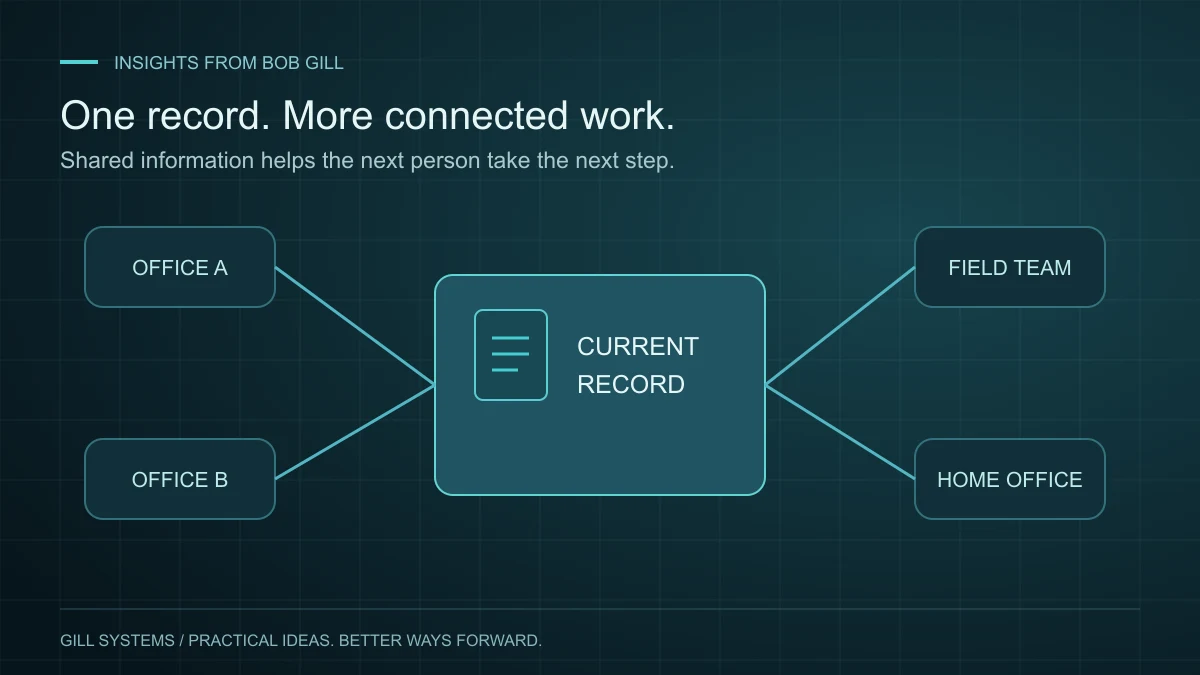
A customer calls one office about something another office handled. Someone searches their email, calls a coworker and waits for an update. Everyone is trying to help, but the information is spread across locations.
That kind of delay can look like a network problem, a software problem or a communication problem. Often it is worth examining all three together.
Start with the question people need answered
Choose a recurring question: What has already been done? Who is responsible now? Which document is current? Then identify where the answer lives and who needs access to it.
A faster connection does not settle conflicting copies of a record. A shared folder does not explain who should update a status. The technical connection and the working agreement need to support each other.
Give shared information a clear home
Decide which system holds the current record for each type of work. Link to that record where possible instead of circulating copies that will drift apart. Use a naming approach people can understand and agree on what must be recorded at a handoff.
Keep permissions deliberate. People should have the access they need for their work, with responsibility for granting and removing it clearly assigned. Connecting offices does not mean making every file available to everyone, or exposing an internal file server to the internet.
Make status useful to the next person
In property management, I networked four locations serving nearly 500 apartments. I also developed software that staff used to track requests, service priorities and completion. The records helped managers see whether work was moving within the expected timeframe.
The broader lesson is about continuity. A useful record explains what happened, who owns the next action and whether something is preventing progress. It should help the next person respond without reconstructing the entire story.
Try one complete handoff
Before changing every process, follow one item between locations. Have the receiving person use the shared record to take the next step. Ask what was missing, unclear or duplicated.
- Could they find the current information without asking around?
- Was responsibility clear?
- Could they record the result without creating another competing copy?
- Did the process still work for someone away from the office?
Sometimes the answer is better configuration of an existing platform. Sometimes a focused custom tool closes a gap. Either way, judge the result by the work it makes easier.
The same thinking applies to separate branches, a home office and warehouse, or field staff working with a central office. The goal is a shared picture that people can actually use.
Continue reading
TradesUnbound 3 minute read
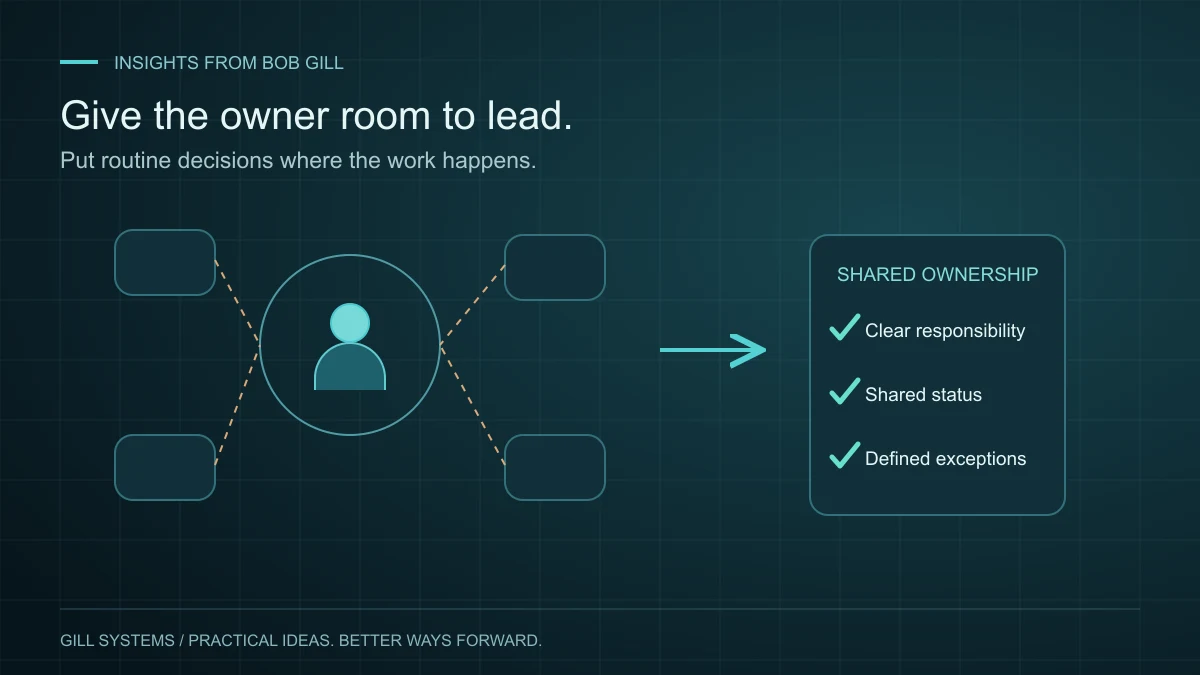
When everything runs through the owner, growth gets harder.
Your judgment matters. The business also needs a way to keep moving without bringing every routine decision back to you.
Read the article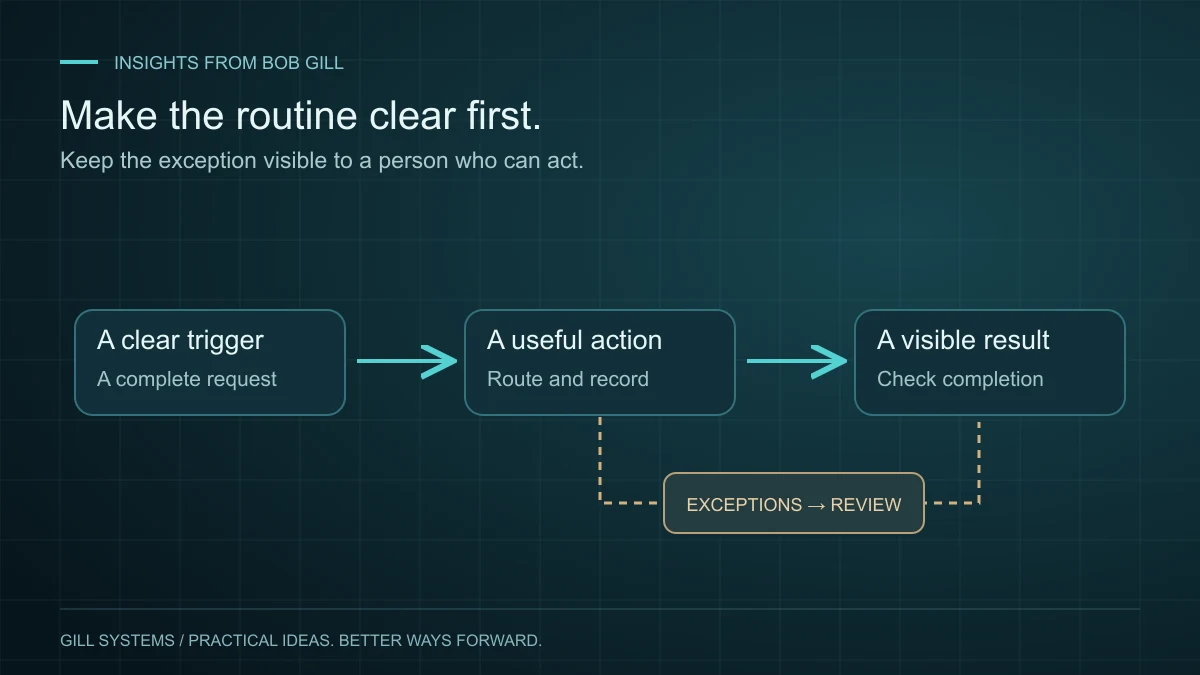
TradesUnbound 3 minute read
Before you automate it, make the process clear.
The best first automation is usually a small, repeatable task with a result you can verify.
Read the article