
Someone copies the same information between two systems. A project lives across email threads and spreadsheets. A simple question takes half an hour to answer. These are good reasons to examine a process, but they are not automatically reasons to commission a new application.
I start by understanding what people are trying to accomplish and where the time or confusion enters the picture. Sometimes the answer is a better setup of software already in use. Sometimes a focused custom tool is the practical choice.
A small tool can remove a large frustration
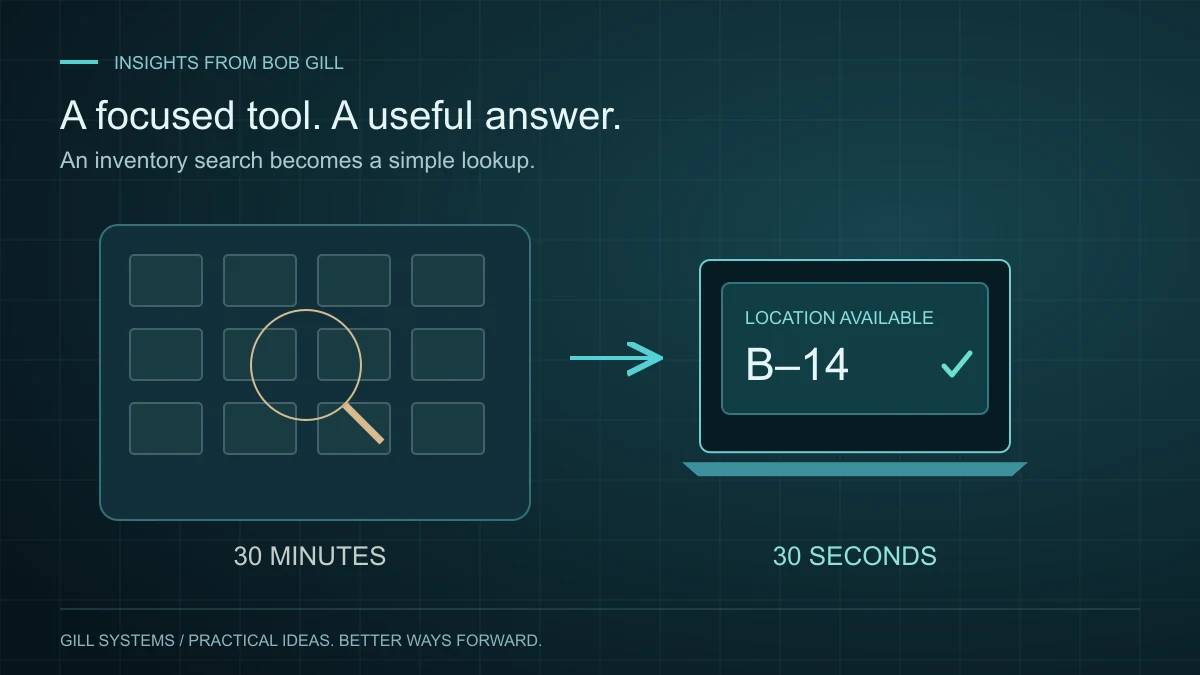
While working in inventory control for a medical-device manufacturer, I received new parts of different sizes. Finding an empty location meant walking the aisles to locate a space that would fit. A search could take 30 minutes.
I identified the problem and proposed a different approach. I standardized locations as small, medium, large and extra-large, then recorded whether each location was occupied or available. The program let a user choose the required size and receive an available location number.
A 30-minute search became a 30-second lookup. Other employees used the software regularly. The improvement came from combining a clearer way to organize the information with a simple way to retrieve it.
Check what you already have
Before building, I would ask whether an existing tool can do the job with a better configuration, a shared view or a simpler workflow. It is worth finding out whether the missing capability is truly absent or just buried in a process nobody has had time to improve.
Custom software becomes more compelling when the need is specific, recurring and poorly served by those options. A team request tracker, a specialized lookup or a personal project dashboard can be useful without becoming an enormous software project.
Define the smallest useful result
Write down who will use the tool, what information goes in and what decision or action should become easier. Then agree on how you will judge the result. Less duplicate entry, a faster lookup or a clear view of outstanding requests is more concrete than “improve efficiency.”
Also decide who keeps the information current. An availability lookup only remains useful if occupied and empty locations are updated accurately. Software cannot make stale information dependable.
Plan for everyday ownership
A working demonstration is a beginning. The finished solution needs appropriate access, backups, a way to export important information and someone responsible for maintaining it. The people using it need to understand what to do when something changes.
That is why I consider implementation part of the work. The point is a practical improvement people can use with confidence, whether it comes from existing software, a focused custom application or a better process.
Continue reading
TradesUnbound 3 minute read
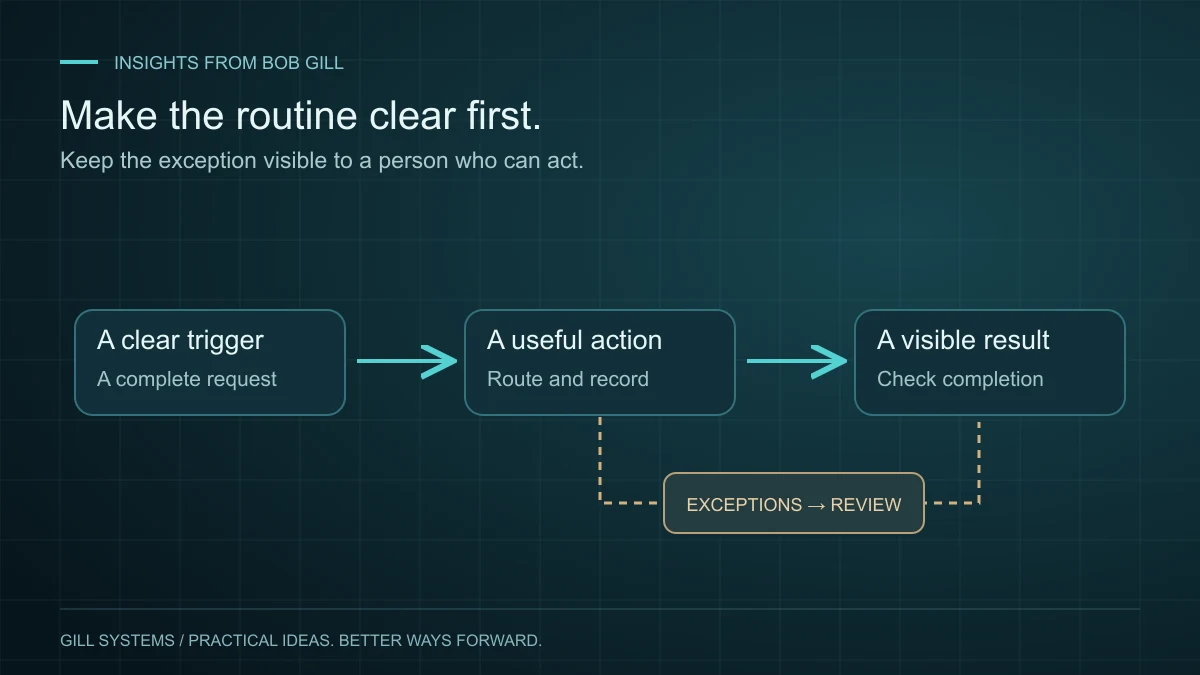
Before you automate it, make the process clear.
The best first automation is usually a small, repeatable task with a result you can verify.
Read the article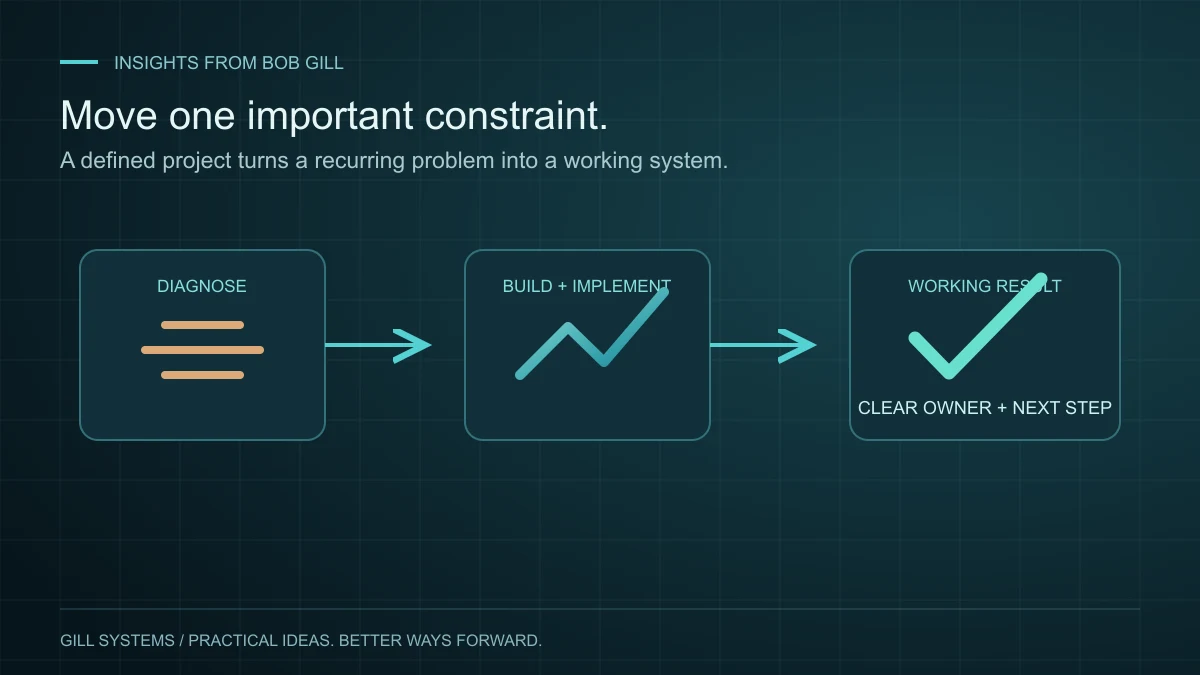
TradesUnbound 4 minute read
A focused improvement project can get a contractor unstuck.
Find the constraint that matters now, put a practical answer to work and leave the business stronger.
Read the article