
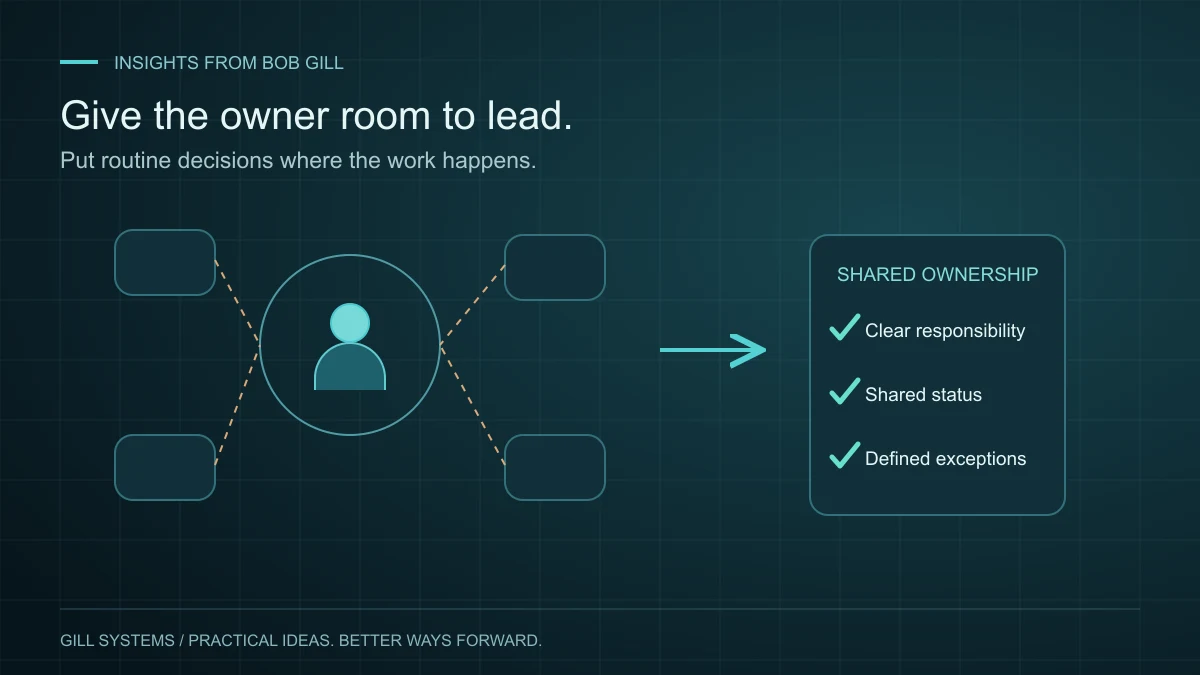
The office needs a decision. Someone in the field needs an update. A customer is waiting for an answer only you seem to have. Each interruption may be reasonable, but together they make it difficult to give the business your full attention.
When the owner holds the details, priorities and next steps in their head, the team learns to come back to the owner. Adding more people or more work can add more questions unless the way information moves changes with it.
Look for the questions that keep returning
Start with the interruptions you hear repeatedly. What is the status? Who is handling this? Which customer should come first? Where do I find that information?
Those questions can reveal something missing: a shared record, a clear responsibility, an agreed standard or a decision someone has not been given authority to make. The answer may be a simple process change rather than a new hire or an expensive system.
Give people a clear way to move the work forward
Handing someone a task is only part of delegation. They also need to know what a good result looks like, which decisions they can make and when to bring an exception back to you. Otherwise, checking with the owner can feel like the safest option.
In a growing service business, I built policies, procedures and an employee handbook alongside software that coordinated requests between field and office staff. That helped provide a consistent way to work, including while the team operated remotely.
The useful question is not how much documentation you have. It is whether the person doing the work can find a clear answer and use it.
Create visibility without constant check-ins
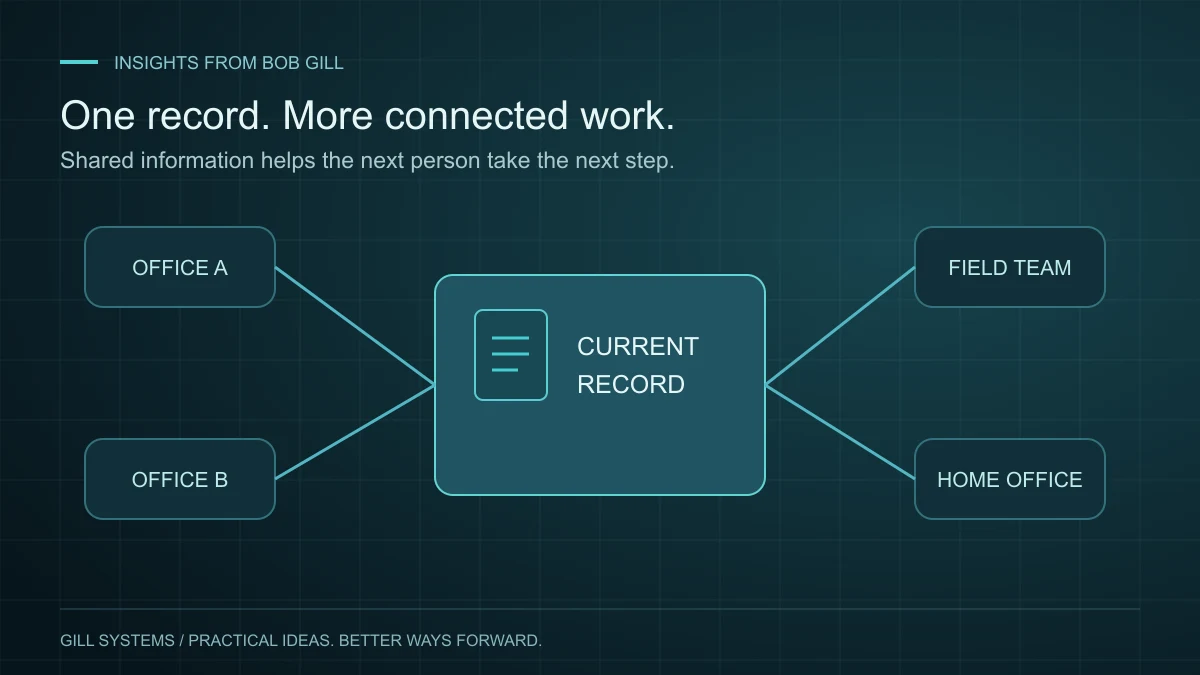
In property management, I connected four offices serving nearly 500 apartments and built software to track requests, service expectations and completion. Staff had a process to follow, and managers could see whether work was moving within the expected timeframe.
The broader lesson applies beyond work orders: put the information where the people who need it can use it. A shared view of open work, ownership and obstacles can replace some of the calls and messages needed just to establish what is happening.
Change one recurring pattern first
Choose one part of the business that repeatedly pulls you away from other work. Agree on who owns it, what information they need, what decisions they can make and what requires your attention. Try the change with real work, then ask the team what remains unclear.
Keep the process proportionate. If recording an update takes more effort than doing the task, people may work around it. A useful system makes the next step easier to understand and easier to carry out.
The aim is to give your judgment more room: a business where people can handle routine work confidently and bring you the decisions that actually need you.
Continue reading
TradesUnbound 3 minute read
Different offices. One clear picture of the work.
Connecting locations is only useful if people can find, trust and act on the information they share.
Read the article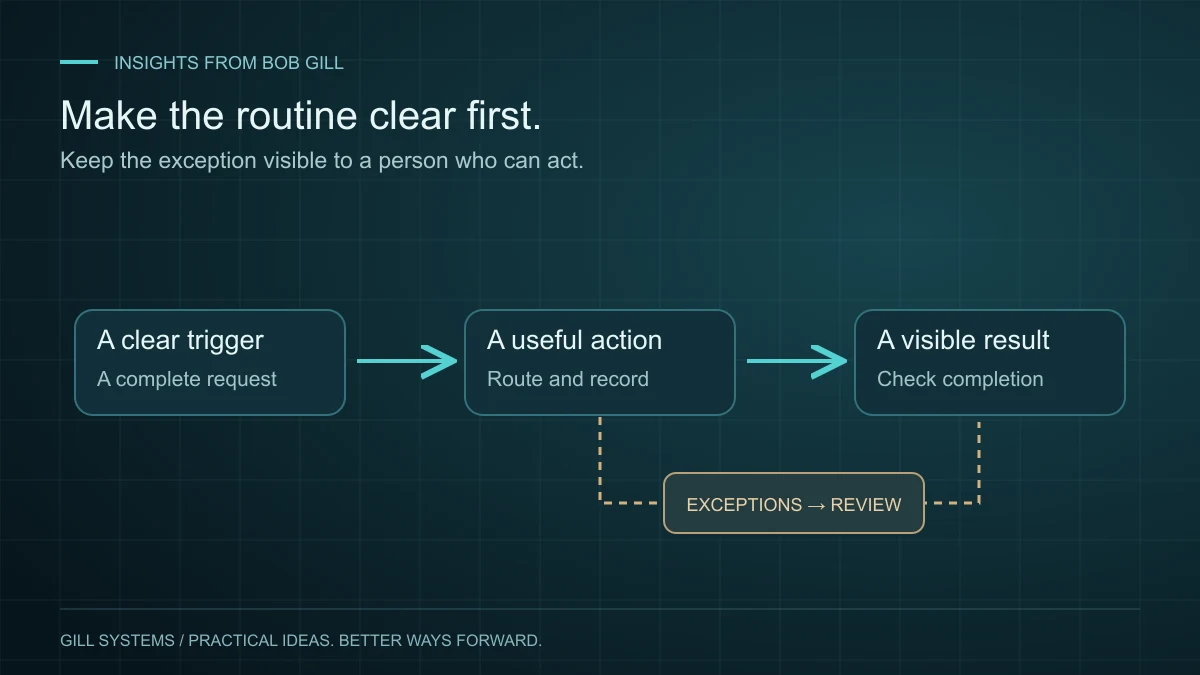
TradesUnbound 3 minute read
Before you automate it, make the process clear.
The best first automation is usually a small, repeatable task with a result you can verify.
Read the article