
A contractor can be busy and still feel stuck. Estimates wait for follow-up. The owner answers every routine question. Marketing produces calls, but the office cannot consistently turn them into scheduled and completed work. The business may need several improvements, yet trying to change everything at once usually adds another layer of strain.
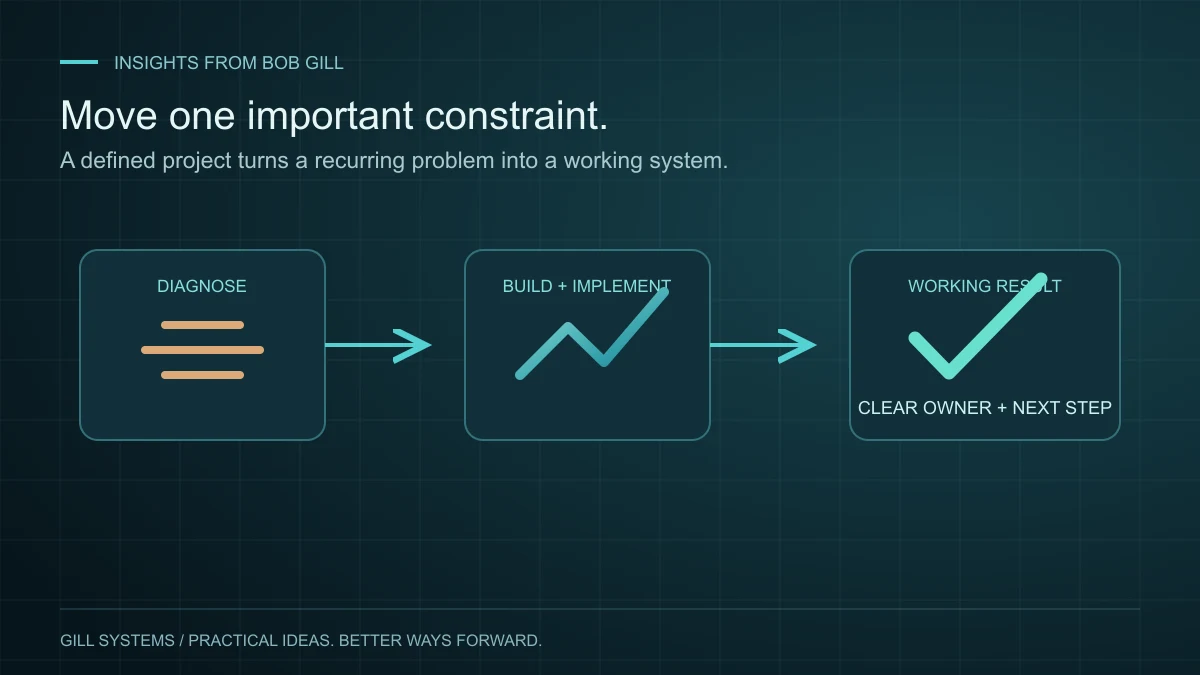
A focused business improvement project begins by finding the problem that matters most now. The goal is a defined result the company can use—not a binder of recommendations that sits on a shelf.
Start with the constraint
Ask where work loses momentum. Is the company struggling to create opportunities, respond to them, complete the work, collect payment or see what is happening across the operation?
The visible problem may not be the underlying constraint. A contractor asking for more leads may actually have weak estimate follow-up. A company that feels understaffed may be losing hours to unclear scheduling and repeated questions. An owner who wants better software may first need a consistent process for the software to support.
Diagnosis matters because it determines where effort will have the greatest effect. The project should solve a real operating problem, not simply introduce something new.
Define the finish line
A useful project has boundaries. Name the result, the people involved and the evidence that the change is working. “Improve sales” is broad. “Create a consistent estimate follow-up process, assign responsibility and make the current status visible” gives the team something it can implement and evaluate.
Depending on the constraint, the work might involve:
- Clarifying a sales or customer follow-up process.
- Documenting responsibilities, policies or operating procedures.
- Improving the way the office and field share information.
- Configuring existing software or building a focused custom tool.
- Connecting marketing, staffing and delivery before adding more demand.
Clear scope protects the owner and the team. Everyone knows what the project is intended to change and what belongs in a later phase.
Implementation is the work
Advice only becomes valuable when it changes the way work happens. That may require choosing a platform, writing the process, setting up the tool, training the people who will use it and testing a complete handoff from one person to the next.
I learned this while helping build a small home-based contractor into a company generating $2.5 million in annual revenue in less than three years. Growth required more than advertising. Brand, marketing, sales, procedures, technology, labor controls, financing and real estate all had to support the same direction. The order mattered because each new capability created the conditions for the next stage.
The same principle applies to a smaller project. If the answer is a new follow-up process, it should be assigned and used. If the answer is a dashboard, the information must stay current. If the answer is a policy, people need to understand how it affects a real decision.
Leave the business able to carry it forward
A defined project should finish with the solution in everyday use, responsibility in the right hands and a clear way to judge whether it is working. The owner should know what changed and where to look when something needs attention.
Some companies will want ongoing support after the initial work. Others will be ready to operate the new system themselves. Either can be a good result. The important part is that the project removes a constraint without creating a permanent dependency.
For a small contractor, the right project can establish the structure the business has been missing. For an established company, it can break through the specific problem that has made growth harder. In both cases, progress comes from connecting judgment with implementation.
Continue reading
TradesUnbound 3 minute read
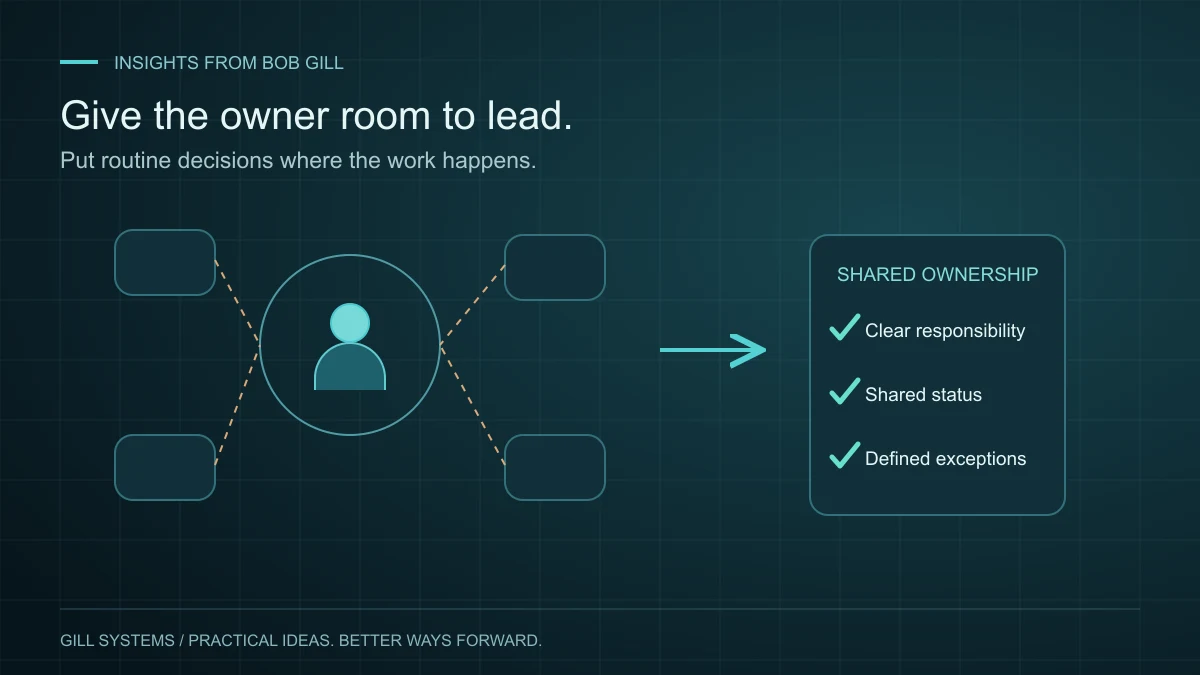
When everything runs through the owner, growth gets harder.
Your judgment matters. The business also needs a way to keep moving without bringing every routine decision back to you.
Read the article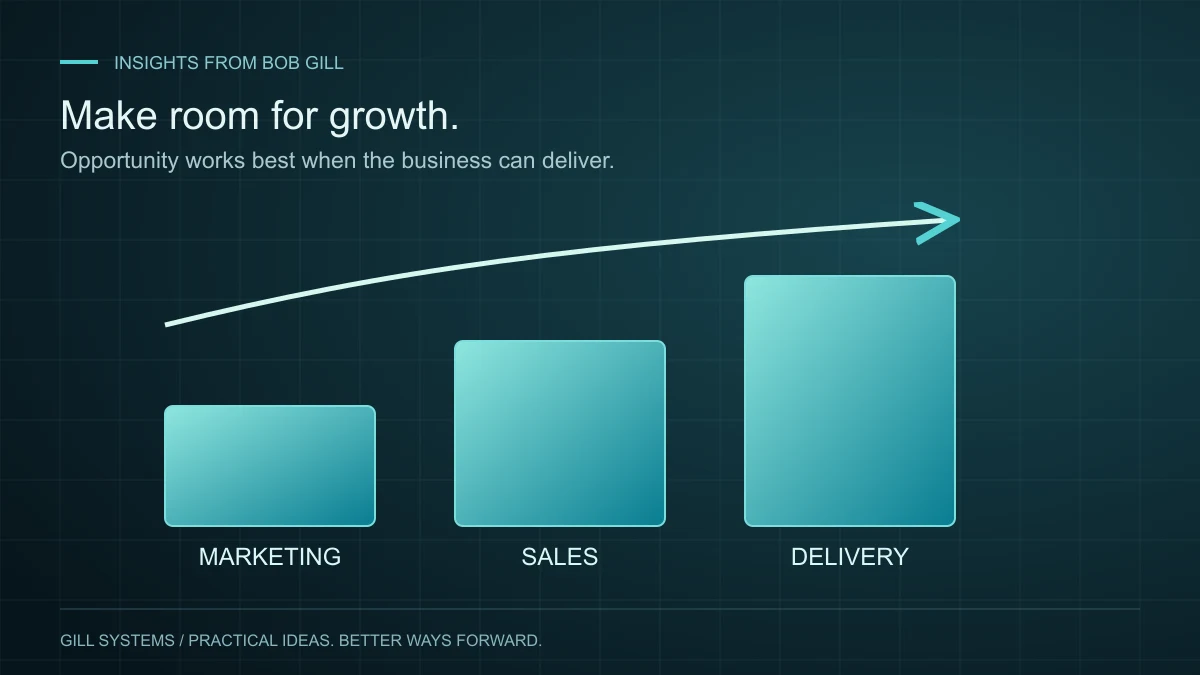
TradesUnbound 3 minute read
Is your trades business ready for more work?
More calls create opportunities. What happens next determines how many become successful jobs.
Read the article