
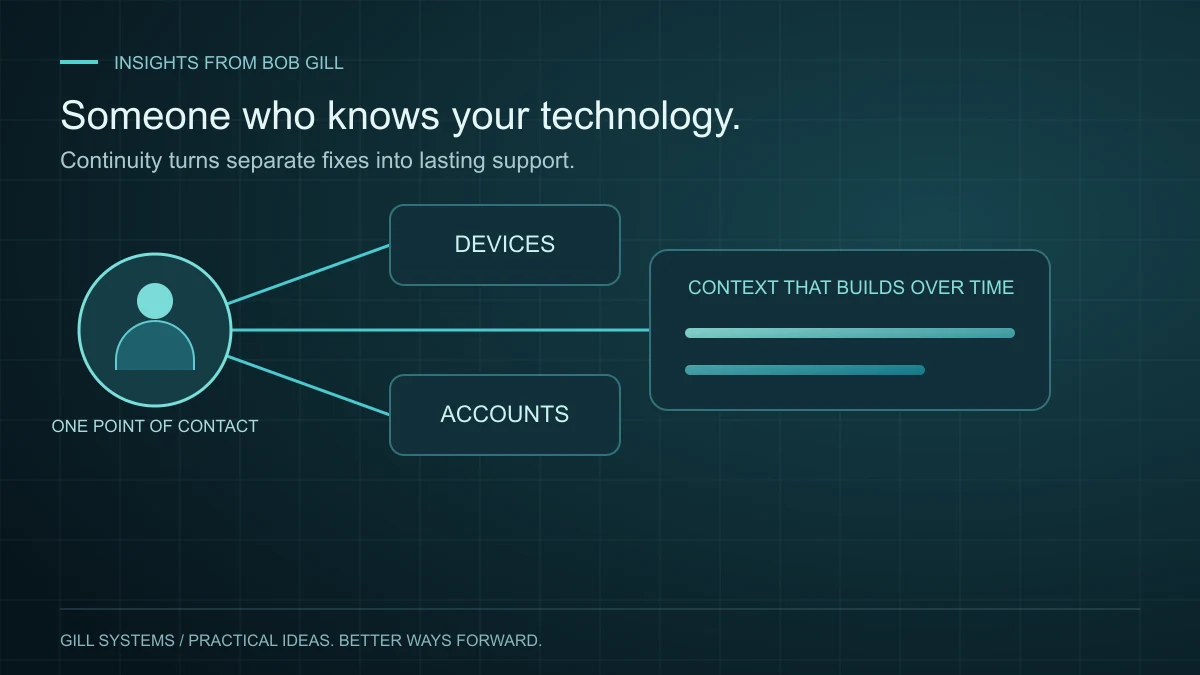
When a computer stops cooperating, a camera goes offline or an account will not sync, the immediate problem may be simple. The time-consuming part is often everything around it: which equipment you have, how it was set up, which accounts connect to it and what you need it to do.
That is why personal technology support improves when it becomes a relationship instead of a series of unrelated service calls. Someone who knows the whole picture can begin with context rather than starting over.
Technology accumulates context
Home technology rarely arrives as one planned system. A router is replaced. A new phone is added. Cameras, televisions, speakers and smart-home devices come from different manufacturers. Passwords and subscriptions collect over time. Each piece may work on its own while the overall setup becomes harder to understand.
A useful support relationship keeps track of the connections that matter. Which wireless network serves which devices? Who controls the account? What did we change the last time this problem appeared? Which products do you find comfortable to use?
That knowledge saves time, but it also improves decisions. A recommendation can fit the way you already live instead of forcing you into a completely new setup.
Continuity changes the first question
Without history, support often begins with a checklist. With history, it can begin with what changed.
If a television suddenly behaves differently, the useful question may be whether a provider updated its equipment. If the Wi-Fi weakens in one room, it helps to know where the access points are and what worked there before. If an unfamiliar message appears on a device, it matters whether it relates to an account we recently adjusted.
The point is not to make technology dependent on one person. You should understand the result and retain control of your accounts. The value is having someone who can connect the new symptom to the larger picture and carry the issue through to a clear resolution.
Ongoing support makes room for prevention
One-time help has an important place. Sometimes a specific problem simply needs to be solved. An ongoing relationship adds the opportunity to deal with smaller questions before they become disruptive.
That might mean reviewing backup and recovery, checking that account information is current, organizing the details of a connected-home system or planning a device replacement before the old one fails. It can also mean having a familiar person to call when a provider, installer or manufacturer needs to be coordinated.
This is the purpose of an annual Concierge IT membership: an agreed amount of access throughout the year, direct communication and a person who already knows your preferences and environment. It provides continuity while leaving room for one-time help when that is all you need.
Larger projects still need a clear scope
Ongoing support should not make a larger project vague. A new camera system, expanded home automation, whole-home audio or a major technology refresh deserves a clear outcome, a practical plan and separate expectations for time and cost.
The existing relationship still helps. The project begins with knowledge of the home and the people using it. Product choices can reflect your preferences, and the finished result can be tested in everyday use rather than judged only by whether the equipment turns on.
Good personal technology support is ultimately about confidence. You know who to contact, that person knows the environment, and the work stays with them until the solution makes sense to you.
Continue reading
Concierge IT 3 minute read
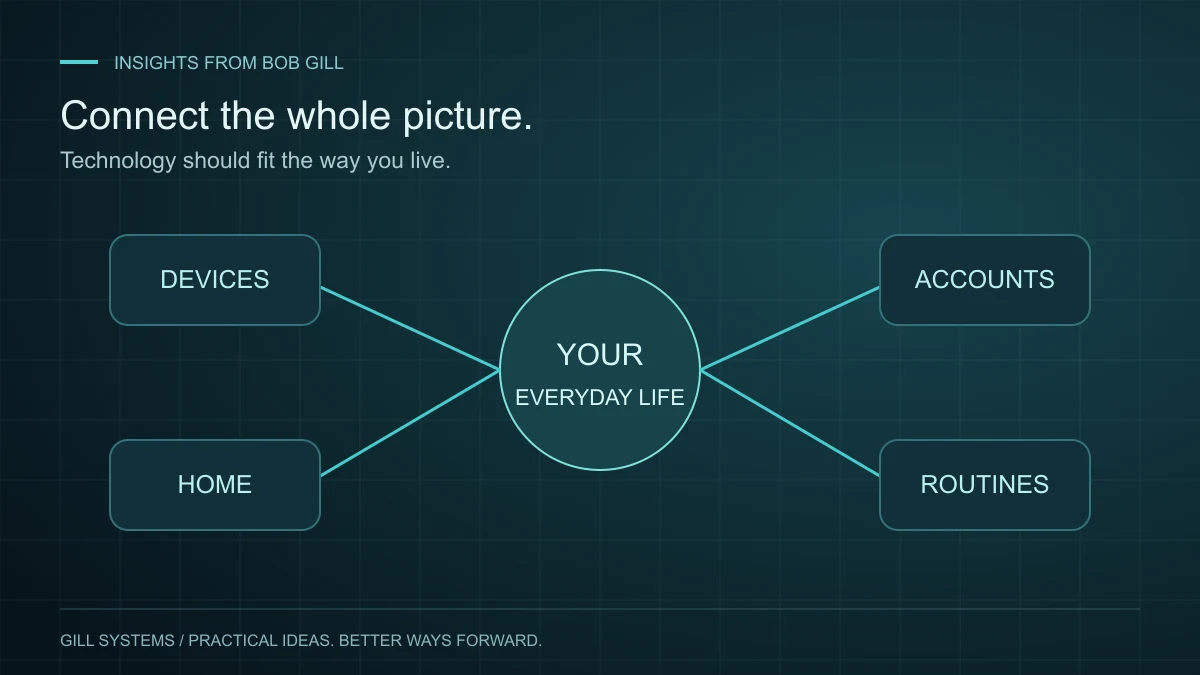
Personal IT support starts with the whole picture.
Your computer, phone, Wi-Fi and accounts are connected. Support should consider how you use them together.
Read the article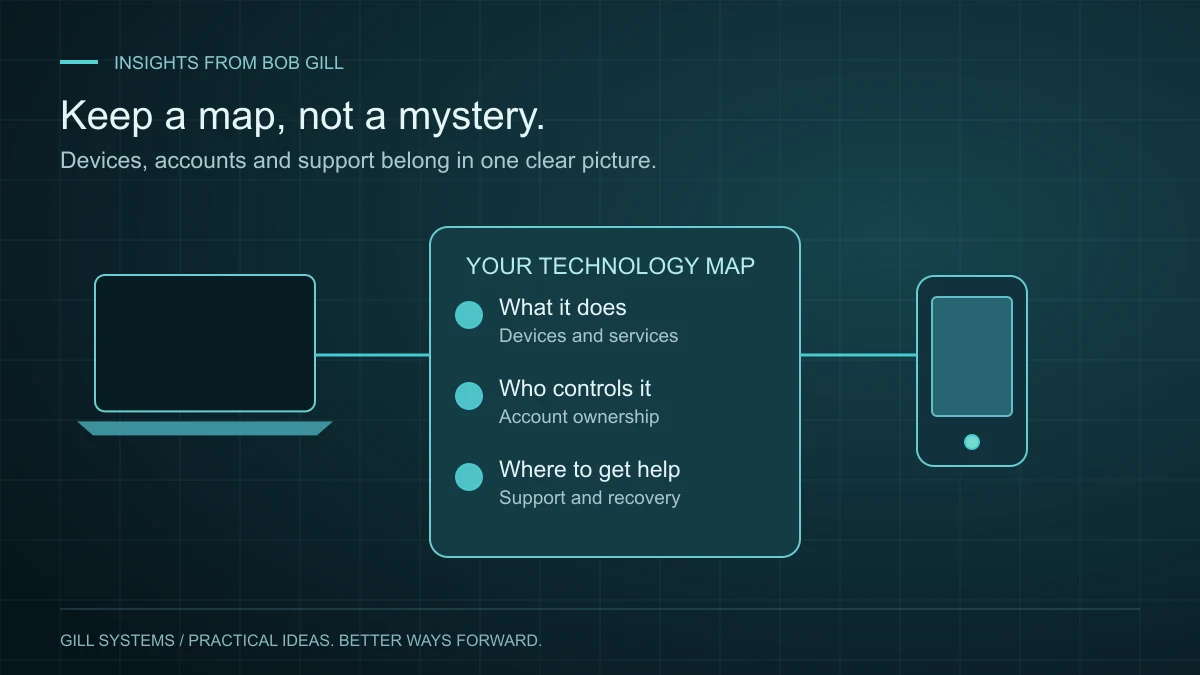
Concierge IT 3 minute read
A home technology setup you can actually keep track of.
The person who installed it should not be the only person who knows how it works.
Read the article