
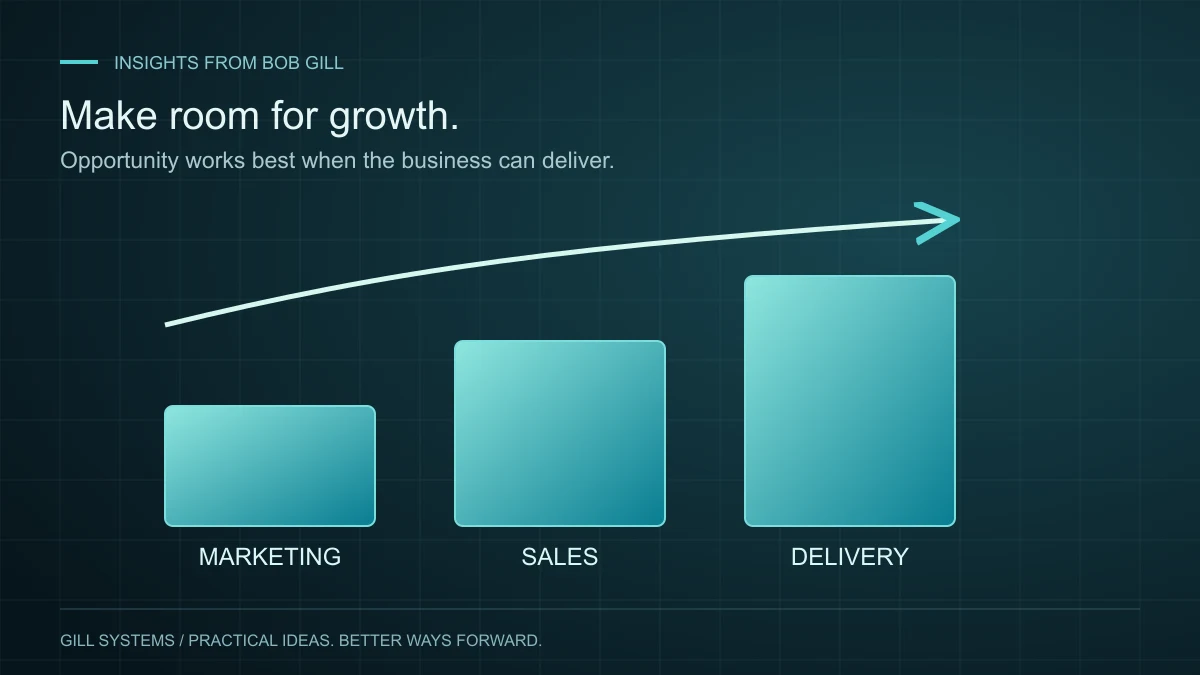
When an owner wants to grow, marketing is a natural place to start. A stronger website, better advertising and a clearer brand can help bring the business into consideration. But the next question matters just as much: what happens when someone responds?
If a prospective customer never hears back, an estimate has no follow-up or the team has to improvise every handoff, more demand can magnify the problems already there. My approach is to connect the work of winning the customer with the work of serving them.
Follow the sale from first call to finished job
Choose a recent job and trace its path. Who received the first call? Where were the details recorded? Who prepared the estimate, and who knew when to follow up? Once the customer agreed, how did the people doing the work receive the information?
Look for places where progress depended on someone remembering to ask the owner. Those are useful starting points for improvement. A clear next step, a named person responsible and a shared record can make the process easier to repeat.
Build the business around the promise
Under my guidance, one service business grew from a small home-based operation generating less than $100,000 to $2.5 million in revenue. My work crossed the boundaries between marketing and operations: the brand, website, vehicle identity, advertising, sales processes, policies, procedures and custom software.
As its needs changed, I also found a commercial property, negotiated the purchase, secured financing and designed the remodel and layout. The facility brought warehousing, meetings and hiring into one place. Each piece had a purpose in the larger business.
That experience shapes how I think about growth. A polished brand sets expectations. The processes and people behind it need to deliver on them. The revenue result is part of that company’s story, not a forecast for another business.
Start with the next constraint
You do not need to rebuild everything at once. Ask where the next increase in work would put the most pressure on the business:
- Can someone other than the owner handle new customer calls and follow up on estimates?
- Does the team have the information needed to start each job?
- Are responsibilities clear when something changes?
- Can you see unfinished work without calling everyone individually?
Pick one weak point, define a practical change and put it into everyday use. Then check whether it actually made the work easier. Creating the conditions for growth means building a business that can handle the opportunity you are working to attract.
Continue reading
TradesUnbound 3 minute read
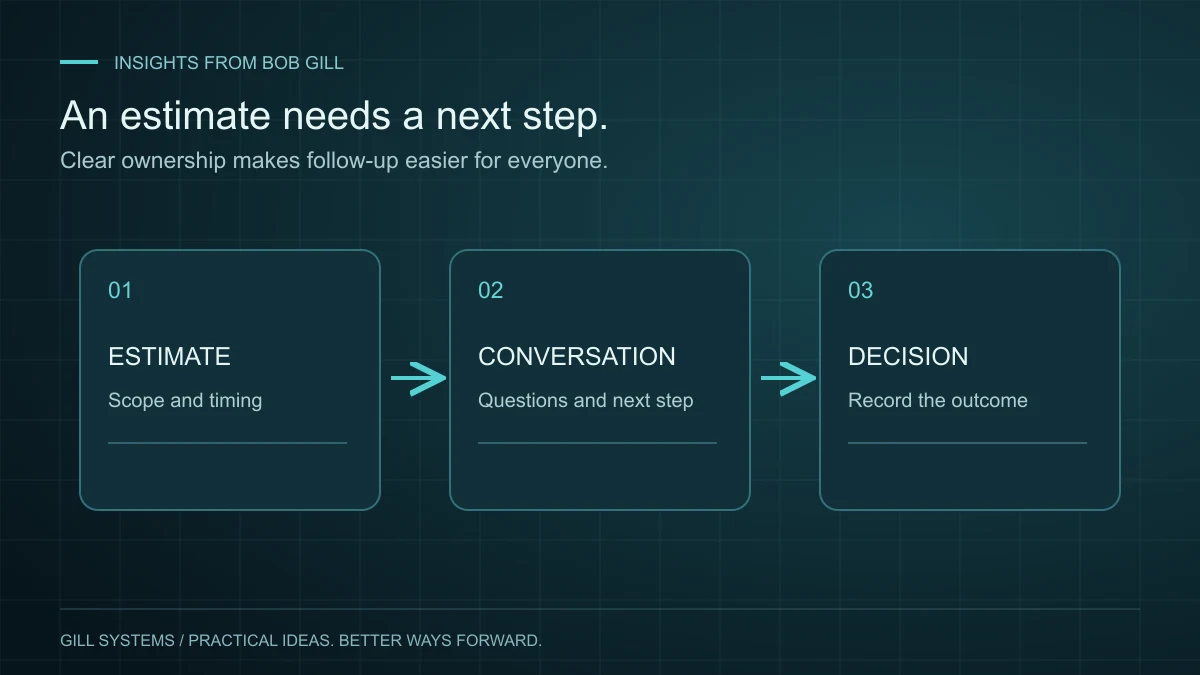
The estimate is sent. What happens next?
A sales process should help the customer make a decision—and help your team know what to do next.
Read the article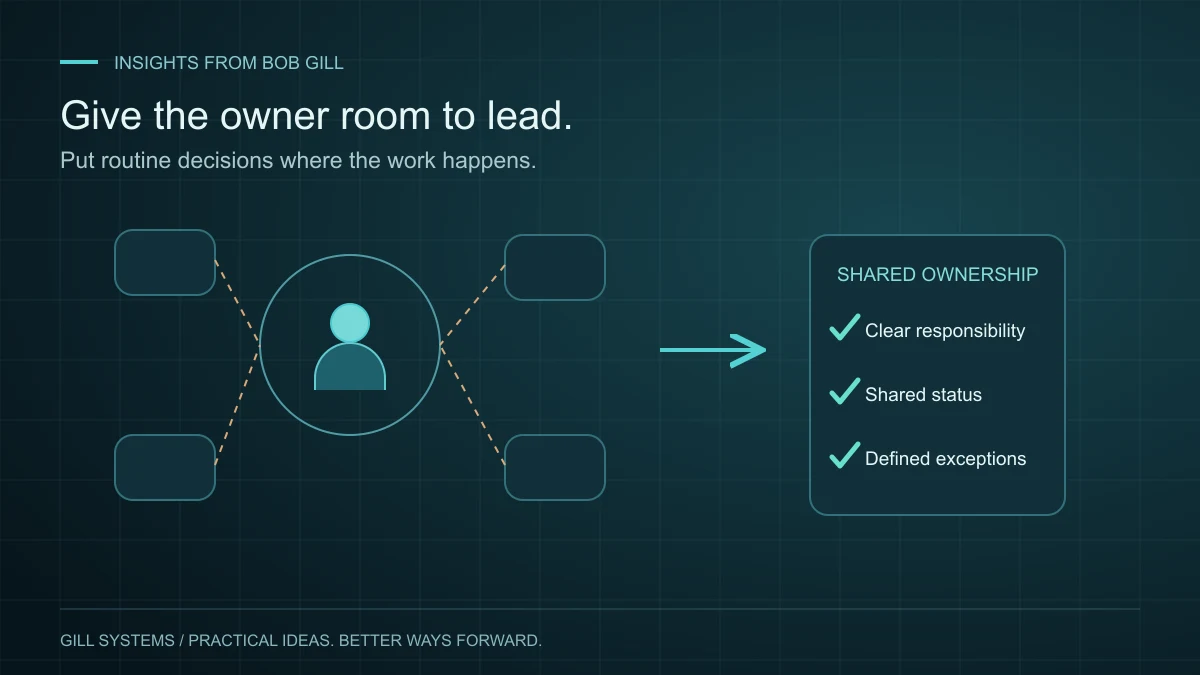
TradesUnbound 3 minute read
When everything runs through the owner, growth gets harder.
Your judgment matters. The business also needs a way to keep moving without bringing every routine decision back to you.
Read the article