
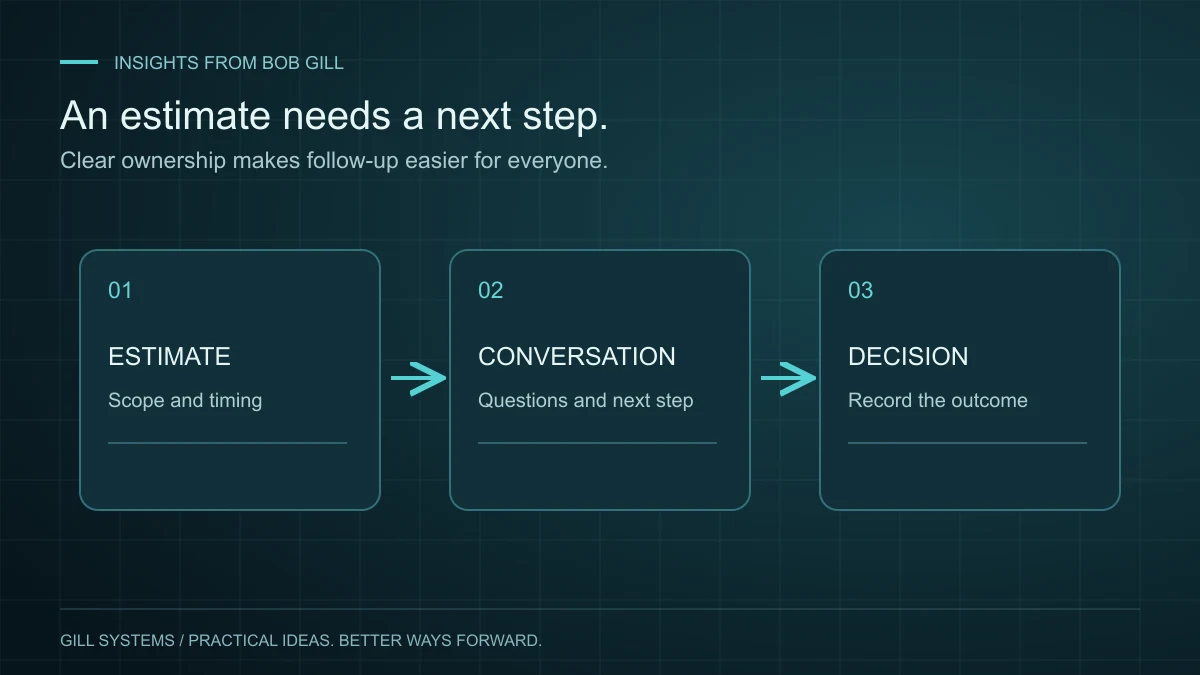
An estimate goes out, the next job starts and a week passes. The customer may have a question. The office may think the owner is following up. The owner may assume the office has it covered.
In a trades business, marketing and sales need a connection. Advertising brings an opportunity into the business; a clear follow-up process helps the team handle that opportunity with care. Sending the estimate should not make the next step disappear.
Agree on the next contact before you finish
When practical, ask the customer when a follow-up would be useful and how they prefer to be contacted. They may be comparing options, waiting on another project or trying to understand the scope.
A useful message might be: “Have you had a chance to review the estimate? I’m happy to clarify the scope or answer questions about timing.” It gives the customer a reason to respond without inventing urgency or assuming they are ready to book.
Keep a shared view of open estimates
You do not need a complicated sales platform to establish the basics. A system your team already uses may be enough. For each estimate, record:
- The customer and the work being considered.
- The date sent and the person responsible for follow-up.
- The current status, such as awaiting review or scope clarification.
- The next action and when it should happen.
Separate “we have not heard back” from “the customer asked us to contact them next month.” Those situations need different responses. If a customer declines or asks not to be contacted, record that and respect it.
Learn from the conversation
Review a manageable sample of estimates together. Were there questions the original scope did not answer? Did the proposed timing fit the customer’s needs? Did anyone know who owned the next step?
Track outcomes consistently, but avoid treating a small sample as a definitive explanation of why people buy. The immediate value is seeing where communication and responsibility need to be clearer.
Carry the details into the job
Once an estimate is accepted, make sure the delivery team receives the agreed scope, relevant customer notes and any promises about timing. Confirm changes through your normal approval process rather than leaving them in someone’s text messages.
In the service business I helped build, my work included the brand, website, advertising and sales processes alongside the systems used to deliver the work. That connection is central to creating the conditions for growth.
Before paying to bring in more calls, look at the opportunities already in front of you. A clear next step can make the sales process easier for both the customer and your team.
Continue reading
TradesUnbound 3 minute read
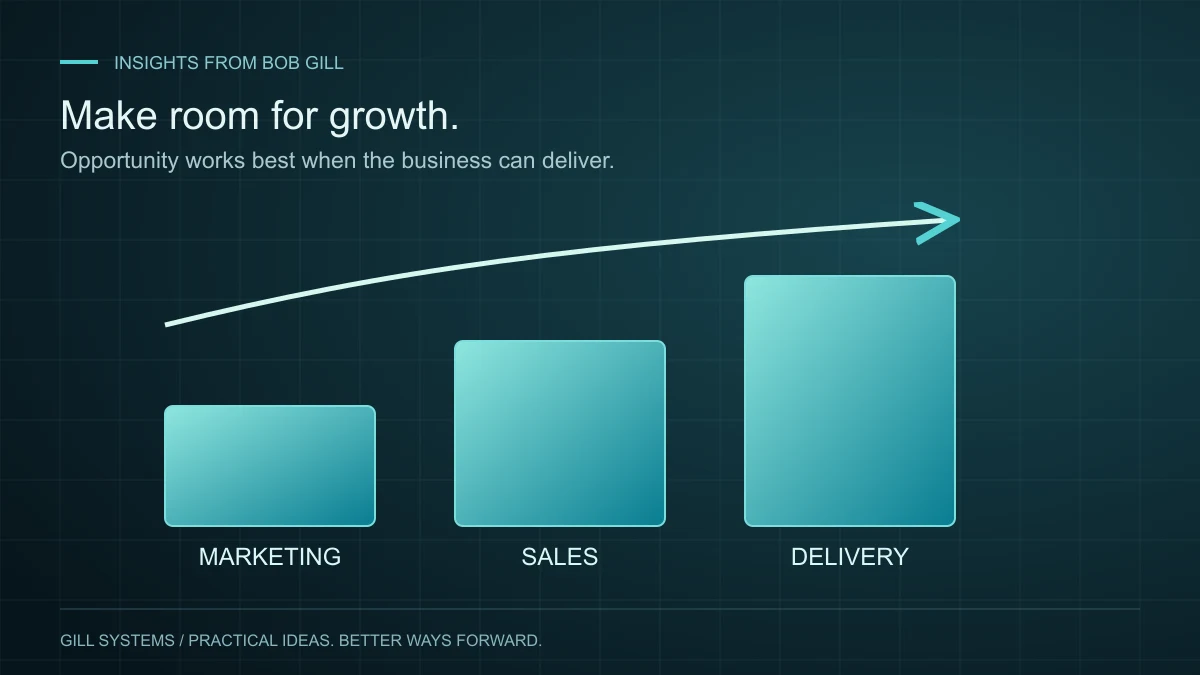
Is your trades business ready for more work?
More calls create opportunities. What happens next determines how many become successful jobs.
Read the article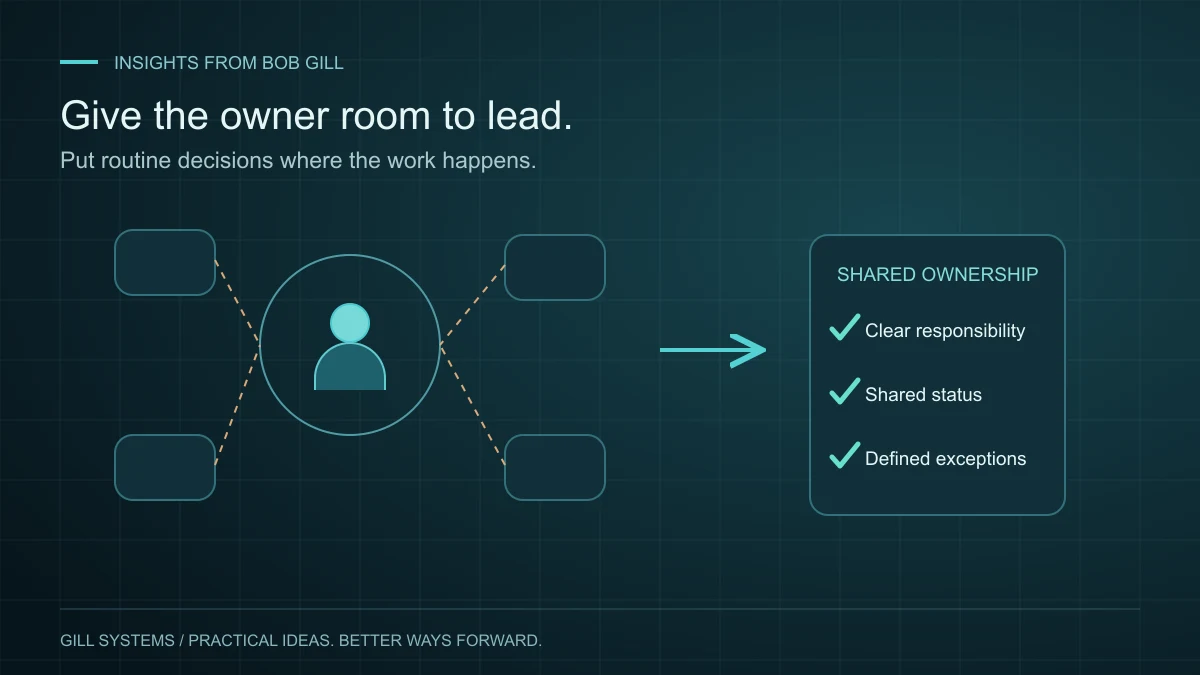
TradesUnbound 3 minute read
When everything runs through the owner, growth gets harder.
Your judgment matters. The business also needs a way to keep moving without bringing every routine decision back to you.
Read the article